Introduction
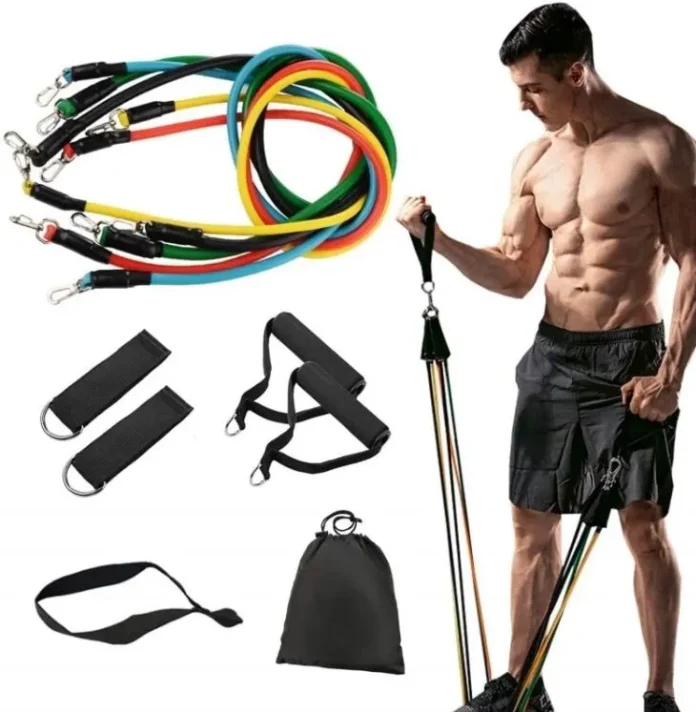
A Resistance bands set with handles is one of the most practical tools for building strength at home, especially when you want a compact, portable, and easy-to-use option. A resistance band is an elastic strength-training tool, and some types use attached handles; they are commonly used for fitness and rehabilitation, and they can be used at home or on the go.
This matters because many people want a training method that does not require a large room, heavy machines, or complicated setup. A well-chosen Resistance bands set with handles can support upper-body, lower-body, and core work while keeping training simple. Home gym guides also list resistance bands as useful supporting accessories in a broader training setup.
In this guide, you will learn how to choose the right set, how to use it safely, how to build a routine, and how to avoid common mistakes. The goal is not just to buy equipment, but to build a habit that feels sustainable and useful every week.
Why This Type of Equipment Is So Popular
There is a reason bands continue to appear in home workout plans: they are light, flexible, and easy to store. Training with bands can also help you work through different angles without needing to rearrange a bench or move to another machine. That angle variety is one reason band work can feel fresh even when the exercises are simple.
A Resistance bands set with handles is especially attractive for beginners because the grips are easy to hold and the setup is less intimidating than many free-weight tools. For more experienced users, the same set can still provide challenge through longer tension, slower reps, and more controlled movement. This is why bands can fit into both beginner and advanced routines.
Another major advantage is convenience. Strength-training videos and routines can be done at home or on the go, and that makes consistency easier for people with busy schedules. When a tool is easy to reach, it is easier to use often.
What To Check Before You Buy
Choosing the right set is easier when you focus on function instead of flashy packaging. A good Resistance bands set with handles should feel stable in the hand, offer a range of resistance levels, and include parts that match your planned exercises.
Resistance Levels
The first thing to look at is resistance variety. A useful set should not force every workout into the same difficulty level. You need lighter options for warm-ups, form practice, and smaller muscles, plus stronger options for rows, presses, and lower-body work. The ability to adjust intensity is one of the core strengths of band training.
Handle Quality
Handles matter more than many buyers realize. If the grips are uncomfortable, slippery, or too small, your training will feel awkward and may become frustrating. Choose handles that feel secure and allow your wrist to stay in a neutral position during pressing and pulling motions.
Band Material
Look at the band itself as carefully as the handles. Good material should stretch smoothly and return without looking twisted or worn too quickly. Since band work depends on tension, the quality of the elastic material is central to the workout experience.
Accessories
Many sets include door anchors, ankle straps, or a carrying bag. Those extras increase the number of exercises you can perform. If you want more exercise options, accessories can be more valuable than adding one extra heavy band.
Who Will Benefit Most From It
A Resistance bands set with handles works well for people who want practical exercise without a large footprint. It is useful for students, office workers, parents, frequent travelers, and anyone building a compact home workout corner.
It is also helpful for people who want controlled movement. Unlike some tools that feel rigid or overly demanding right away, bands can be used with gradual resistance changes and slower tempo work. That makes them useful for technique practice and steady progress.
A set like this can also be a smart choice for a home gym plan. BTM’s home gym guide describes resistance bands as one of the supporting accessories that make home training more versatile.
Benefits You Can Expect
The main value of a Resistance bands set with handles is not just convenience. It can support a complete routine when used with intention.
It Supports Full-Body Training
You can train chest, shoulders, back, arms, glutes, legs, and core with the same set. That makes it easier to keep your weekly plan balanced without collecting too much equipment.
It Helps You Train Consistently
The easier a tool is to set up, the more likely you are to use it. A home-friendly tool can help you turn short pockets of time into productive sessions, which matters more than perfect equipment. Home gyms are often valued for this kind of consistency and accessibility.
It Can Reduce Workout Barriers
A band routine does not require much space, and that lowers the barrier to training on busy days. This is one reason people keep a set nearby instead of storing it far away in a cabinet.
It Works Well for Variety
Because bands allow different anchors, grips, and movement angles, your sessions can stay interesting. ACE notes that one benefit of band work is the ability to challenge muscles from slightly different angles without moving to another machine.
Best Exercises To Try First
When you are new to a Resistance bands set with handles, start with simple movements that teach control before speed.
Chest Press
Anchor the band behind you and press forward with steady control. Keep your shoulders down and avoid shrugging. The goal is to feel your chest and triceps working together.
Seated Row
Sit with the band anchored in front of you and pull the handles toward your torso. This is a strong choice for posture, upper-back strength, and balanced pulling strength.
Shoulder Press
Stand on the band or anchor it low and press the handles overhead. Keep your rib cage controlled so the movement stays smooth.
Biceps Curl
Stand on the band and curl the handles upward. Move slowly and avoid swinging your body for momentum.
Squat to Press
Hold the handles at shoulder level, perform a squat, and press as you stand. This combines lower-body effort with upper-body coordination.
Glute Bridge With Band Tension
Place the band securely and use a bridge pattern for hips and glutes. Focus on squeezing the glutes rather than rushing through the motion.
A good set gives you enough exercise variety to cover all major movement patterns, which is why band training remains so popular in home routines.
How To Build A Simple Weekly Routine
You do not need a complicated split to get value from a Resistance bands set with handles. A clean weekly rhythm often works better than a long, exhausting plan.
Three-Day Starter Plan
Day 1 can focus on pushing and legs. Use chest press, shoulder press, squat to press, and glute work.
Day 2 can focus on pulling and arms. Use seated rows, biceps curls, face pulls, and rear-delt work.
Day 3 can focus on full-body flow. Use a circuit of squats, rows, presses, and core movement.
This approach works because strength programs often respond well to steady repetition and manageable volume. Mayo Clinic notes that resistance-tubing exercises can be done at home or on the go, which makes regular practice much easier to maintain.
Reps And Sets
A sensible starting point is 2 to 4 sets of 8 to 15 reps depending on the movement and your current level. Use slower reps for form practice and shorter rest periods for endurance-style work. For strength development, train with enough effort that the final few reps feel challenging while your form remains clean.
Progress Without Guesswork
Progress can come from adding reps, increasing tension, improving control, or reducing rest time. That is useful because bands let you change the workload without buying new machines. ACE highlights the value of changing angles and exercise setup, which also helps progression stay interesting.
Form Matters More Than Force
When using a Resistance bands set with handles, clean form matters more than trying to make every set feel extreme. Bands reward control. If you rush, twist, or lean too far, the movement becomes less effective.
Keep your shoulders down and relaxed during upper-body work. Keep your core stable. Move with a smooth tempo. Do not let the handles snap back quickly at the end of a repetition. Good control also helps you stay consistent from workout to workout.
This is one reason bands are so useful for home training: they teach awareness. You feel the movement, not just the effort.
Safety Tips Worth Following
A Resistance bands set with handles is simple, but safety still matters.
Check the band before each workout. Look for cracks, thinning, or wear near the handles and anchor points. If a band looks damaged, replace it.
Anchor the band only to secure points. Doors should be fully closed and locked when using a door anchor, and the anchor should be placed in a way that does not slip.
Start with lighter tension. Many people make the mistake of choosing resistance that is too hard, which can damage form and make the workout uncomfortable.
Keep your space clear. Since band work involves movement in multiple directions, you need enough room to step, rotate, and extend without hitting furniture.
Common Mistakes To Avoid
Even a useful tool can be wasted if it is used poorly.
The biggest mistake is choosing too much resistance too soon. If your form breaks, lower the level.
Another mistake is only doing arm exercises. A Resistance bands set with handles can train the whole body, so it makes sense to use it that way.
A third mistake is training without a plan. Random workouts feel productive for a moment, but progress is easier to track when your routine has structure.
Modern Garden Rooms: A Blend of Nature and Comfort
A fourth mistake is ignoring recovery. Your body improves between sessions, not only during them. A balanced routine with rest and proper sleep will serve you better than exhausting yourself every day. General exercise guidance from Mayo Clinic supports regular activity as part of a healthy lifestyle.
How To Make It Part Of Daily Life
The best training tool is the one you actually use. That is why a Resistance bands set with handles often becomes a lasting part of a person’s routine.
Keep it visible. If it sits under a bed or in a hard-to-reach box, it will be forgotten.
Pair it with a habit you already have. For example, you can do a 10-minute band session after morning prayer, after work, or before your shower.
Keep sessions short when needed. Fifteen minutes of focused work is better than a perfect hour that never happens.
Track your sessions. Write down exercises, sets, reps, and how the band felt. Progress becomes easier to see when you record it.
A Smart Buying Checklist
Before you buy a Resistance bands set with handles, ask these questions:
Does the set include more than one resistance level?
Do the handles feel sturdy and comfortable?
Is there a door anchor or other useful accessory?
Does the material look durable?
Will the set fit the exercises you actually want to do?
If the answer to most of these is yes, the set is probably a good fit.
Why Home Training Works So Well
Home training is popular because it removes many of the barriers that stop people from staying consistent. BTM’s home gym article describes home gyms as practical setups that support consistent and controlled routines, and it notes that resistance bands are part of effective home gym accessories.
A Resistance bands set with handles fits that idea perfectly because it is small, versatile, and easy to store. You do not need a special room to start. You only need enough space to move safely and enough commitment to keep showing up.
That is also why this kind of tool works so well in a broader home fitness plan. It keeps the entry point low while still allowing real progress.
WellHealth How to Build Muscle Tag: A Complete Guide to Natural Strength
Sample 14-Day Starter Plan
Here is a simple way to begin with a Resistance bands set with handles without overcomplicating things.
Days 1, 3, 5
Do 3 sets each of chest press, row, squat to press, and biceps curl. Finish with a light core movement.
Days 2, 4, 6
Walk, stretch, or do mobility work.
Day 7
Rest.
Repeat the same pattern for the second week, but add one extra rep to each set or slow down the lowering phase slightly. That small change is enough to create progress without overwhelming your body.
If the routine feels too easy, increase tension or add one more set to two exercises. If it feels too hard, lower the resistance and keep the form crisp.
Where It Fits In A Larger Fitness Space
Many people use a Resistance bands set with handles alongside a bench, a yoga mat, or a few free weights. It is also useful in a garden room, spare room, or multipurpose home corner.
BTM’s article on modern garden rooms even mentions a gym or fitness area as one of the possible uses, which shows how flexible personal workout spaces can be.
That flexibility is the real strength of bands. They do not demand a special environment. They adapt to the space you already have.
A Comprehensive Guide To Building An Effective Home Gym
Final Thoughts
A Resistance bands set with handles is not just a budget-friendly piece of equipment. It is a practical way to train with less friction and more consistency. It supports full-body exercise, adapts to small spaces, and gives you enough variation to keep workouts useful over time.
The most important thing is not owning the perfect set. It is using the set you have with regular effort, clean form, and a steady routine. When you do that, simple equipment becomes a serious tool for lasting strength.
A Resistance bands set with handles can help you start small, stay organized, and build a training habit that actually lasts. And for many people, that is exactly what makes it valuable.
For a quick background reference, see Wikipedia’s article on resistance bands.