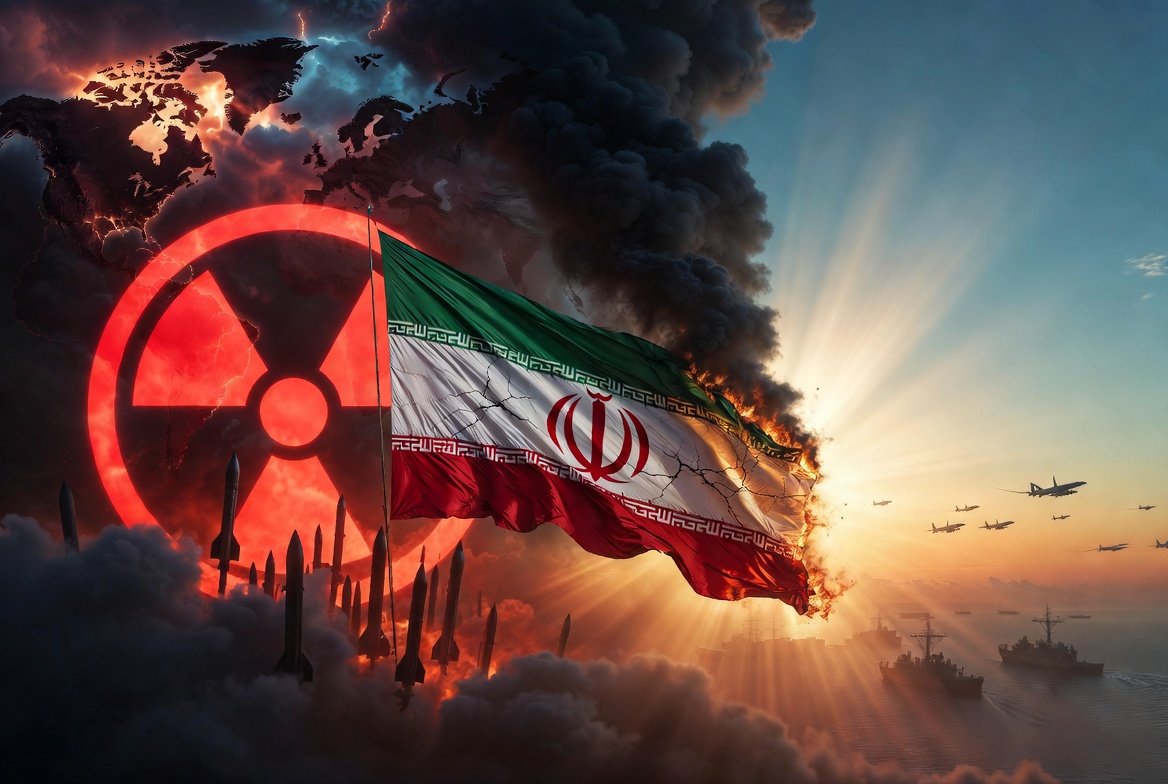
The Iranian regime has long pursued policies that threaten regional stability and global security. As highlighted in frontpage magazine discussions on conservative geopolitical strategy, the choice facing the international community today is clear: confront the regime’s ambitions head-on or risk a cascade of events leading to World War III. Recent military operations in 2025 and 2026, including targeted strikes on nuclear and missile infrastructure, demonstrate that decisive action can degrade these dangers before they spiral out of control. By addressing the regime’s nuclear pursuits, proxy networks, and alliances with revisionist powers now, the United States and its partners can prevent the kind of miscalculation that has ignited global conflicts in the past. This article examines the strategic, historical, and practical reasons why immediate confrontation remains the most effective path to long-term peace.
Historical Background of Iran’s Destabilizing Actions
To understand why confronting the Iranian regime is essential, one must examine its pattern of behavior since the 1979 revolution. The regime has consistently supported militant groups across the Middle East, exporting instability rather than fostering cooperation. From funding and arming factions in Lebanon and Iraq to backing insurgent activities in Yemen and beyond, Tehran has built a network designed to challenge Western influence and neighboring states without direct conventional engagement.
This approach dates back decades. In the 1980s, during the Iran-Iraq War, the regime demonstrated a willingness to endure immense costs for ideological goals. Subsequent decades saw it invest heavily in asymmetric capabilities, including ballistic missiles and support for non-state actors. These efforts were not defensive but aimed at projecting power far beyond its borders. By the early 2000s, intelligence assessments revealed accelerated work on sensitive technologies that could alter the balance of power in the Persian Gulf and beyond.
The regime’s actions have repeatedly brought the region to the brink. Attacks on international shipping, support for operations targeting civilian populations, and attempts to dominate key waterways like the Strait of Hormuz have raised global concerns about energy security. Nations dependent on stable oil flows have watched with alarm as Tehran used proxies to disrupt trade routes, indirectly threatening economies worldwide.
Internal repression has further complicated the picture. The regime’s focus on external adventurism has come at the expense of its own citizens, leading to periodic unrest that underscores the fragility of its governance model. Yet rather than reform, leaders have doubled down on confrontation, viewing external pressure as justification for continued militarization.
This history reveals a consistent pattern: the regime responds to weakness with escalation but pulls back when faced with credible deterrence. Past diplomatic efforts, including the 2015 nuclear agreement, provided temporary pauses but failed to address the root causes of its behavior. Instead, they allowed time for capability buildup. The lesson is clear—prolonged engagement without enforcement invites greater risks. Confrontation, when calibrated and focused on core threats like nuclear development and proxy support, has proven more effective at curbing ambitions.
The Advancing Nuclear Program and Breakout Risk
Iran’s nuclear program represents the most immediate danger. Over years, the regime has enriched uranium to levels far beyond civilian needs, developing centrifuges and facilities capable of rapid advancement toward weapons-grade material. Intelligence from multiple sources has indicated proximity to a breakout point, where production of sufficient fissile material for a device could occur in weeks or months.
Recent operations in June 2025 and February 2026 significantly damaged key sites, including enrichment facilities at Natanz, Fordow, and Isfahan. These strikes set back timelines but did not eliminate the regime’s knowledge base or hidden stockpiles. Without sustained pressure, reconstruction efforts—supported by external suppliers—could resume quickly. The regime has already shown resilience, shifting activities to underground or dispersed locations to evade detection.
Why does this matter for World War III prevention? A nuclear-armed Iran would fundamentally change regional dynamics. It could embolden proxies to act with impunity, knowing their patron possesses an ultimate deterrent. Neighboring states, feeling existential threats, might pursue their own programs, triggering a proliferation cascade. Saudi Arabia, Egypt, and Turkey have the technical foundations and incentives to respond in kind, creating a multipolar nuclear environment prone to miscalculation.
Moreover, a nuclear Iran could alter great-power calculations. Alliances with Russia and China, already deepening through technology transfers and joint exercises, would gain a dangerous new dimension. A regime shielded by nuclear capability might pursue bolder actions in the Gulf, risking direct clashes with U.S. forces or allies. History shows that nuclear proliferation among adversarial states heightens escalation risks, as seen in Cold War crises. Delaying confrontation allows the regime to cross thresholds that make future intervention far costlier.
Targeted action now—focusing on infrastructure, leadership nodes, and supply chains—degrades these capabilities while they remain manageable. It sends a message that the international community will not tolerate weaponization, deterring both Iran and potential copycats.
Iran’s Proxy Networks: The Hidden Army Fueling Regional Chaos
Beyond nuclear pursuits, the regime’s extensive proxy network poses a parallel threat. Groups backed by Tehran operate across multiple theaters, creating a web of deniable operations that complicate responses. These include well-armed militias in Iraq, fighters in Lebanon, and naval disruptors in the Red Sea. Their activities range from missile launches to asymmetric attacks on commercial vessels, all calibrated to raise costs without triggering full-scale war.
This architecture allows the regime to project power while maintaining plausible deniability. Funding, training, and arms transfers sustain these groups, turning local grievances into instruments of broader strategy. The result has been heightened tensions in the Levant, Arabian Peninsula, and Gulf, with ripple effects on global trade and security.
Confronting the regime disrupts this ecosystem at its source. Recent strikes have degraded command structures and supply lines, weakening proxy effectiveness. Without Iranian resupply and direction, these groups face sustainability challenges, as explored in analyses of Iran’s staying power in the 2026 conflict. Timely pressure prevents the network from maturing into an even more formidable force capable of coordinated multi-front campaigns.
The strategic value of addressing proxies now cannot be overstated. An unchecked network could evolve into a trigger for wider conflict, drawing in external powers through incidents at sea or attacks on allies. By degrading the sponsor, confrontation reduces the likelihood of such escalatory chains, preserving stability and preventing the kind of entangled alliances that preceded previous world wars.
Iran’s Alliances with Major Powers: A Recipe for Global Conflict
Tehran’s partnerships with Russia, China, and North Korea form a revisionist axis that amplifies its reach. Technology sharing, joint military drills, and economic arrangements provide the regime with advanced systems and diplomatic cover. In return, Iran offers a foothold in a critical region, challenging Western dominance.
These ties raise the specter of great-power involvement. Should the regime feel sufficiently threatened or empowered, it might draw its partners into direct support roles. Russia, engaged elsewhere, has supplied components; China seeks energy security and counters U.S. influence. A nuclear or conventionally resurgent Iran backed by this axis could transform regional disputes into global confrontations.
Confrontation now disrupts this momentum. Degrading capabilities signals resolve, discouraging deeper entanglements. It prevents the regime from becoming a linchpin in a broader anti-Western coalition. As conservative voices like those at frontpage magazine have argued, allowing such alliances to consolidate unchecked invites the very multipolar conflict structures that historically precede worldwide wars. Strong action isolates the regime, forcing partners to reassess costs and benefits.
Recent Confrontations in 2025 and 2026: Lessons Learned
The operations of the past year provide a blueprint for effective strategy. In June 2025, coordinated strikes targeted nuclear and missile assets, demonstrating precision and restraint. Follow-on actions in early 2026 expanded to leadership and proxy support elements, further eroding the regime’s offensive potential.
These efforts achieved key objectives: significant setbacks to enrichment, destruction of missile production sites, and disruption of command chains. Importantly, they occurred without requiring large-scale ground commitments, minimizing escalation while maximizing impact. Proxies responded unevenly, revealing limits in their coordination and sustainability.
Public discourse, including coverage of Pakistan to host peace talks between U.S. and Iran, highlights diplomatic off-ramps alongside military pressure. Yet history shows that diplomacy succeeds only when backed by credible strength. The recent campaigns illustrate that confrontation, when focused and proportionate, yields results without the endless commitments of past interventions.
These lessons affirm the value of timely action. Delaying until threats fully materialize would have allowed irreversible advancements, potentially requiring far more extensive responses later.
Why Now Is the Critical Moment for Action
The current window is narrow. The regime’s infrastructure remains damaged but repairable. Proxies are reeling but regrouping. Alliances are active but not yet fully militarized. Acting decisively exploits these vulnerabilities before reconstitution.
Economic pressures compound the regime’s challenges. Sanctions and disrupted oil exports limit resources for rebuilding. Internal dissent, fueled by governance failures, offers opportunities to support voices for change without direct interference.
Now is the time because the costs of inaction compound exponentially. Each unchecked milestone brings the world closer to thresholds where deterrence fails and miscalculations proliferate.
Potential Consequences of Inaction: Path to World War III
Inaction invites a nightmare scenario. A nuclear-capable Iran emboldens proxies for bolder attacks, provoking responses from Israel or Gulf states. Escalation draws U.S. forces, pulling Russia and China into defensive postures. Supply disruptions spike energy prices, straining global economies and fueling unrest. Alliances harden into blocs, mirroring pre-1914 Europe or pre-1939 tensions.
The regime’s ideology, combined with advanced weaponry, creates perfect conditions for overreach. Proliferation follows, multiplying flashpoints. What begins as a regional crisis metastasizes into global war through interlocking commitments and honor-bound responses.
Confrontation now severs these links, denying the regime tools for escalation and preserving space for de-escalation.
Countering the Critics: Addressing Concerns About Escalation
Skeptics warn that confrontation risks immediate blowback. Yet evidence from recent operations shows manageable responses. The regime’s capabilities, while threatening, proved limited against prepared defenses. Proxies hesitated, and partners offered rhetoric rather than intervention.
Critics overlook that appeasement historically invites aggression. Diplomacy without leverage has repeatedly failed here. Balanced pressure—military, economic, and informational—minimizes risks while maximizing leverage for eventual negotiations on verifiable terms.
Path Forward: A Strategy for Lasting Stability
The United States and allies must maintain pressure on critical nodes while supporting regional partners. Intelligence sharing, maritime security, and economic isolation complement targeted actions. Public messaging should emphasize defensive necessity, not regime change as an end in itself.
Long-term success requires addressing root drivers: the regime’s revolutionary ideology and economic mismanagement. Supporting internal reform voices, without occupation, can foster organic change.
By confronting threats now, the international community upholds the post-World War II order of deterrence and non-proliferation. This approach prevents World War III not through wishful thinking but through realistic strength. The stakes—energy security, ally protection, and global peace—demand no less.